In a historic move for the continent’s medical infrastructure, instant logistics giant Zipline has officially announced its single largest market expansion: the construction of 12 new distribution hubs across Nigeria. This ambitious growth shifts the narrative of Zipline’s Nigerian operations from pioneering pilots to national essential infrastructure.
Building upon established, life-saving footprints in states such as Kaduna, Cross River, and Bayelsa—where drone technology has halved maternal mortality rates by delivering emergency blood products on-demand—this expansion aims to link over 20,000 healthcare facilities. When fully realized by 2028, Zipline's optimized network will bring reliable access to vaccines, blood, and acute care commodities to nearly 100 million Nigerians.
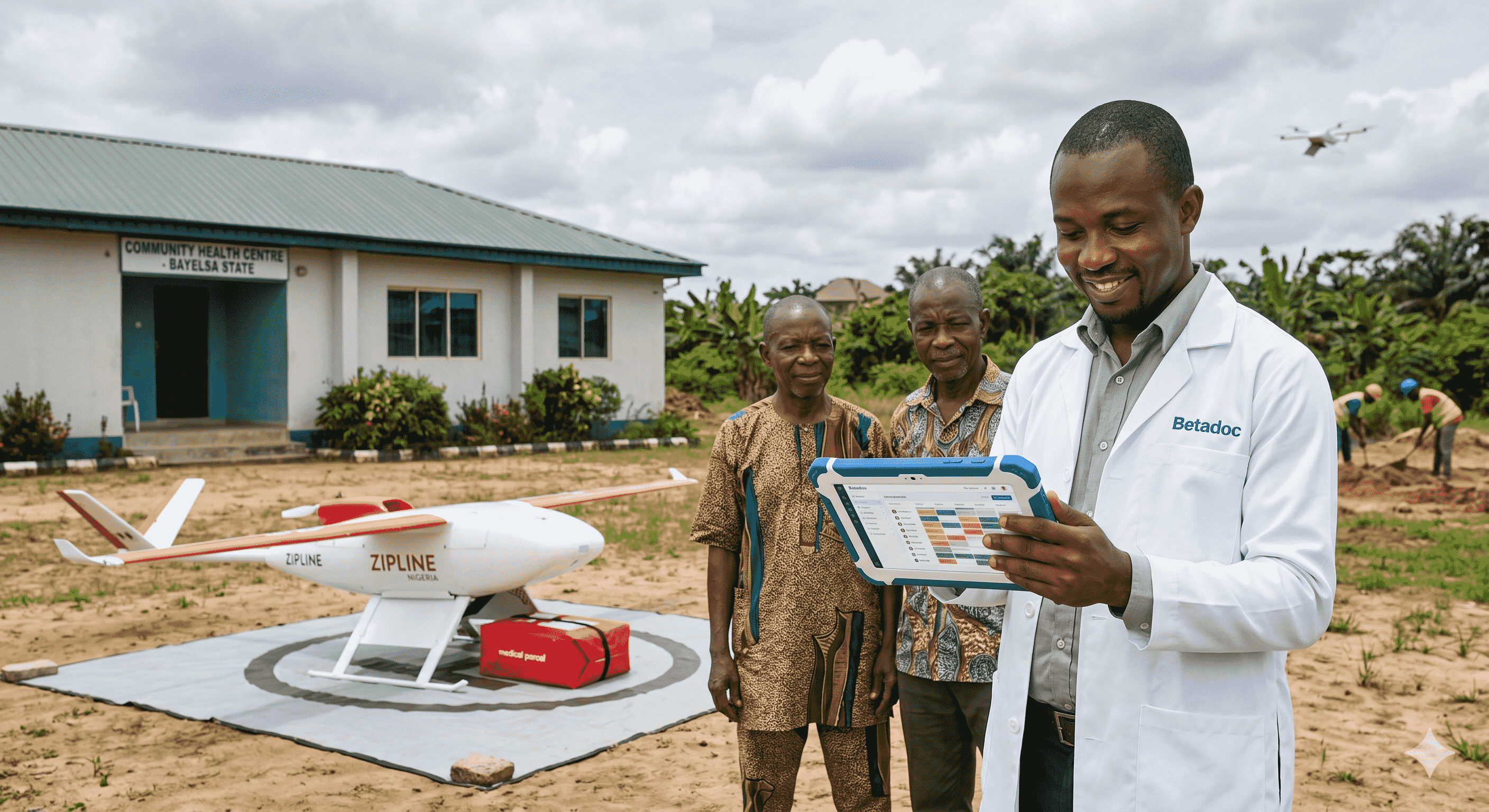
For Nigerian medical practitioners, this news is transformative. The persistent nightmare of critical commodity stockouts—which statistics indicate cripple over 56.8% of rural facilities—is being engineered out of existence. Zipline's automated fulfillment system means that a life-saving unit of blood or antivenom can arrive at a remote center in under an hour, turning fatal supply gaps into routine logistics.
The Betadoc Perspective: Closing the Loop with Virtual and Physical Precision
While Zipline constructs the physical highway for instant supply chains, Betadoc provides the critical software interface. This announcement amplifies the vital role of integrated digital health systems. To successfully manage your practice against this logistical boom, you need a administrative workflow that matches Zipline’s speed.
